Culture is Your Brand: How Zappos Scaled Exceptional Customer Service to $1B

Zappos didn't just sell shoes; they sold an experience. Discover how Tony Hsieh turned corporate culture into a billion-dollar competitive advantage.
Most companies view customer service as a necessary evil—a line item on the profit and loss statement to be optimized, outsourced, or automated into oblivion. They treat the support department like a fire extinguisher: something you only reach for when the house is already burning. But at Zappos, under the visionary leadership of the late Tony Hsieh, the perspective was inverted entirely. Service was not a department; it was the product. It was the marketing strategy. It was the brand.
In his seminal work, 'Delivering Happiness,' Hsieh argued that if you get the culture right, the brand will take care of itself. This wasn't just corporate jargon; it was a radical economic thesis that transformed an online shoe store into a billion-dollar juggernaut. By focusing on the intersection of behavioral psychology and long-term customer lifetime value, Zappos proved that happiness is a scalable business model. As we unpack these lessons, you’ll see why the strategies detailed in our comprehensive 'Culture-Driven Growth' e-book are more relevant today than ever.
This article examines the architecture of that success. We aren't just looking at slogans on a wall; we are looking at the rigorous, often counterintuitive systems that Hsieh implemented to ensure that every interaction with a customer reinforced the brand’s promise. If you are building a team, managing a startup, or looking to revitalize your business, the Zappos blueprint offers a masterclass in how to align human nature with commercial success.
1. The Economic Case for Radical Customer Service
Standard business school pedagogy teaches us that customer service is a cost center. You want to minimize 'Average Handle Time' (AHT) and maximize throughput. Hsieh looked at the same data and saw a massive blind spot. He realized that the cost of acquiring a customer through traditional advertising was skyrocketing, while the cost of retaining one through exceptional experiences was a fraction of the price. By empowering support agents to spend as much time as necessary on the phone—sometimes hours—Zappos built an emotional connection that transcended the transactional nature of e-commerce.
Psychologically, this taps into the 'Peak-End Rule,' a cognitive bias which states that people judge an experience largely based on how they felt at its peak and at its end. By training agents to be 'human' rather than 'scripted,' Zappos ensured that the end of every customer interaction was a positive, memorable emotional peak. When a customer calls to return shoes and ends up chatting about their life or getting a recommendation for a local pizza place, the brand ceases to be a retailer and becomes a friend. This creates a moat of customer loyalty that no amount of discount codes can erode.
Customer service shouldn't just be a department; it should be the entire company.
- Prioritize Lifetime Value (LTV) over single-transaction margins.
- Remove scripts: Allow employees to express their authentic personalities.
- View support calls as unpaid marketing opportunities, not as expenses.
2. The $2,000 Quit Offer: Filtering for Cultural Alignment
One of the most famous, and often misunderstood, tactics in the Zappos playbook is the 'Offer.' After a few weeks of intensive training, every new hire is offered $2,000 to quit. It sounds like a reckless way to lose good talent, but it is actually a masterful application of behavioral economics. The goal isn't to get people to leave; it is to filter out those who are only there for a paycheck.
When someone accepts the offer, the company saves the massive long-term cost of a disengaged employee. When someone rejects the offer, they have effectively signaled their commitment to the company's mission. They have psychologically 'bought in' to the culture. This mechanism forces a candidate to confront their own motivations early. In our 'Hiring for High Performance' e-book, we discuss how most companies hire for skills and fire for behavior. Zappos flips this: they hire for behavior and train the skills.
Implementation Framework for Cultural Filtering
To implement this in your own organization, you don't necessarily need to offer cash. Instead, create a 'Commitment Milestone.' This could be a rigorous onboarding project or a culture-centric interview round where candidates must demonstrate alignment with core values. The key is to create a moment of friction where a candidate can opt-out if their values don't match the company’s. If they stay, their engagement increases because they have made an active, conscious choice to be there.
3. The 10 Core Values: Beyond the Office Wall
Most company values are platitudes—vague words like 'integrity' or 'excellence' that mean nothing to the average employee. Zappos took a different approach. Their 10 core values were actionable, specific, and often quirky. Values like 'Create Fun and a Little Weirdness' or 'Build Open and Honest Relationships with Communication' weren't meant to be framed; they were meant to be lived. These values acted as a decision-making framework for every employee, from the warehouse floor to the executive suite.
The psychological principle at play here is 'Social Norming.' By making the values explicit and rewarding behavior that aligned with them, Zappos created a self-policing culture. You didn't need a manager watching you; your peers would naturally reinforce the values because they were part of the social fabric. This reduces management overhead significantly. When your team knows the 'why' behind their 'what,' they act with autonomy. This is the essence of high-leverage productivity: shifting from a culture of compliance to a culture of commitment.
4. Scaling the 'Zappos' Vibe: The Science of Happiness
Tony Hsieh was deeply influenced by the science of happiness. He understood that people are happiest when they are in a state of 'flow' and when they feel they have control over their environment. Zappos designed their workplace to encourage serendipitous interaction. They didn't just build an office; they built a community. They encouraged employees to be their 'whole selves' at work, recognizing that the division between 'work-life' and 'personal-life' is largely an artificial construct.
When employees are happy, they are naturally more creative and more resilient. In high-stress environments, burnout is often caused by a lack of autonomy and a lack of social support. By fostering deep interpersonal connections, Zappos built a psychological safety net. If you want to scale this, stop focusing on 'perks' like free snacks. Focus on 'connection'—create systems where employees are incentivized to learn about each other’s lives outside of their job titles. A team that knows each other as humans, not just roles, is significantly harder to break.
5. The Power of Transparency and Radical Candor
Communication is often the first thing to break in a scaling company. As Zappos grew, Hsieh leaned into radical transparency. He believed that if you treat employees like adults, they will behave like adults. This meant sharing financial results, being honest about challenges, and encouraging employees to call out leadership when they felt the culture was drifting. This level of openness builds trust, and trust is the ultimate currency of business.
Without trust, you need layers of bureaucracy and middle management to ensure compliance. With trust, you can operate with a flat hierarchy, allowing for rapid decision-making. This is the secret to Zappos’ agility. They could pivot, launch new initiatives, and solve problems faster than competitors who were bogged down by internal politics. If you want to understand how to build this in your own firm, our library of leadership guides provides a step-by-step roadmap for implementing 'radical transparency' without causing chaos.
6. Why Most Companies Fail at Culture
The most common mistake leaders make is assuming culture is something they can 'install' or 'delegate' to HR. Culture is not a poster or a retreat; it is the sum of every decision made under pressure. When a company faces a crisis and chooses to prioritize short-term profit over their stated values, the culture dies instantly. Employees are hyper-observant of this hypocrisy. Once trust is broken, it is nearly impossible to rebuild.
Another trap is the 'hiring for cultural fit' paradox. If you only hire people who think like you, you create an echo chamber. Zappos avoided this by hiring for 'cultural add'—seeking people who shared the company’s core values but brought different perspectives and experiences. This diversity of thought is what keeps the culture vibrant and prevents it from becoming a cult. Remember: culture should be a living, breathing entity that evolves with the team, not a static monument to the founder’s ego.
7. Common Traps & Subtle Nuances to Avoid
Even the best-intentioned companies fall into the trap of 'performative culture.' They might organize events and give out swag, but if the underlying work structure is toxic, these efforts will only breed cynicism. You must ensure that your operational systems—pay, promotion, and performance management—are perfectly aligned with your cultural values. If you claim to value 'open communication' but punish employees for speaking truth to power, your culture is effectively dead.
- Avoid the 'Perk Trap': Free coffee cannot fix a broken management structure.
- Stop hiring for 'fit' and start hiring for 'add' to prevent stagnation.
- Never sacrifice long-term cultural integrity for short-term revenue spikes.
8. Action Plan: 7-Day Implementation Blueprint & Conclusion
To start your journey toward a Zappos-level culture, don't try to change everything overnight. Start with one core value. For the next seven days, audit every meeting and decision you make against that value. Is it reflected in how you speak to your team? Is it reflected in how you handle customer complaints? For deeper guidance, refer back to the chapters in our 'Foundations of Scaling' e-book, which breaks down the specific meeting cadences and management rituals that support these shifts.
Building a billion-dollar brand is rarely about having the best technology or the lowest prices. It is about building a system where people are excited to contribute their best work every day. When you align your business goals with the human need for connection, meaning, and autonomy, you don't just build a company—you build a legacy. Start today by asking yourself: what is the one thing I can do to make my team feel more empowered, more human, and more connected to our mission?
About the writer

Writer
Imesha is a Software and EdTech Specialist for EveryTuesdays. She covers software and mobile development, artificial intelligence, personal development, book reviews, and actionable digital learning guides to help readers upskill.
You May Also Like
Browse All
Why Your Nervous System Dictates Your Spending Habits
Financial choices aren't just about math—they are biological responses to stress. Learn how your nervous system drives spending and how to reclaim control.
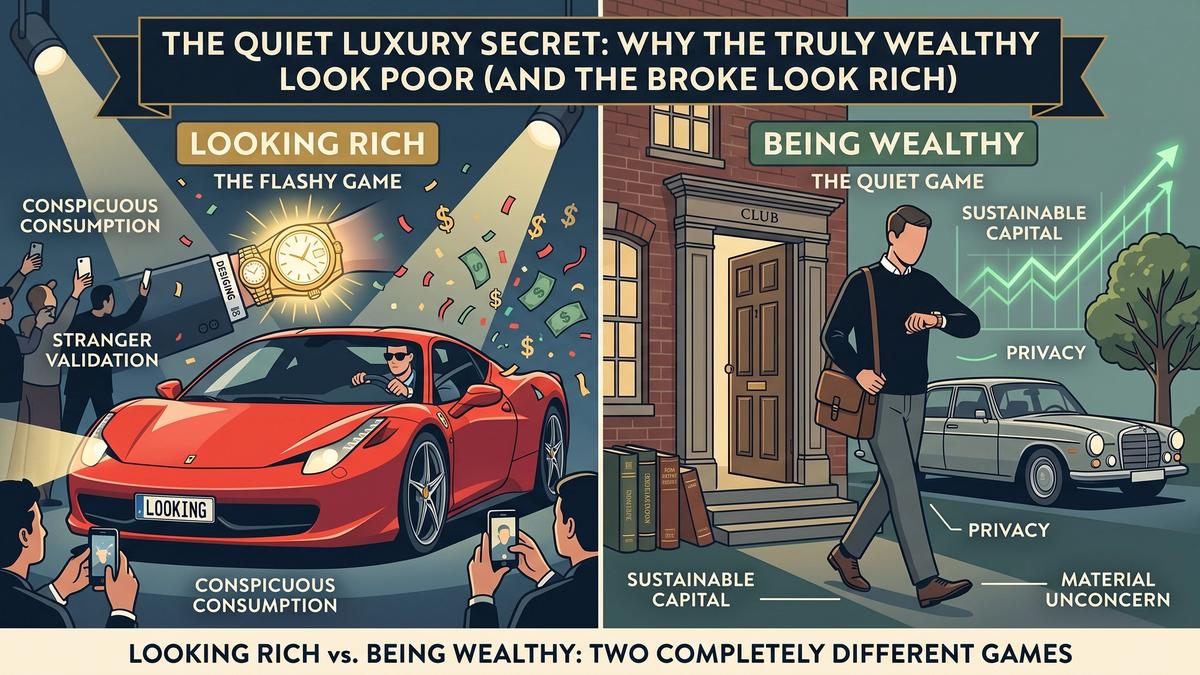
The Quiet Luxury Secret: Why the Truly Wealthy Look Poor (And the Broke Look Rich)
That $100k Ferrari doesn't prove someone's rich it proves they have $100k less. Here's why real wealth is built to stay invisible.

Earning More Than Your Family: Why Success Feels Like Betrayal
Why does hitting a financial milestone feel like betrayal instead of victory? Your attachment system may be reading success as a threat to belonging.