Why a $47 Bill Can Panic a Six-Figure Earner: Unpacking Financial Flashpoints
Your salary says you're safe. Your nervous system disagrees. Here's why a small bill can trigger full-blown panic and how to trace it back
Why a $47 Bill Can Panic a Six-Figure Earner: Unpacking Financial Flashpoints
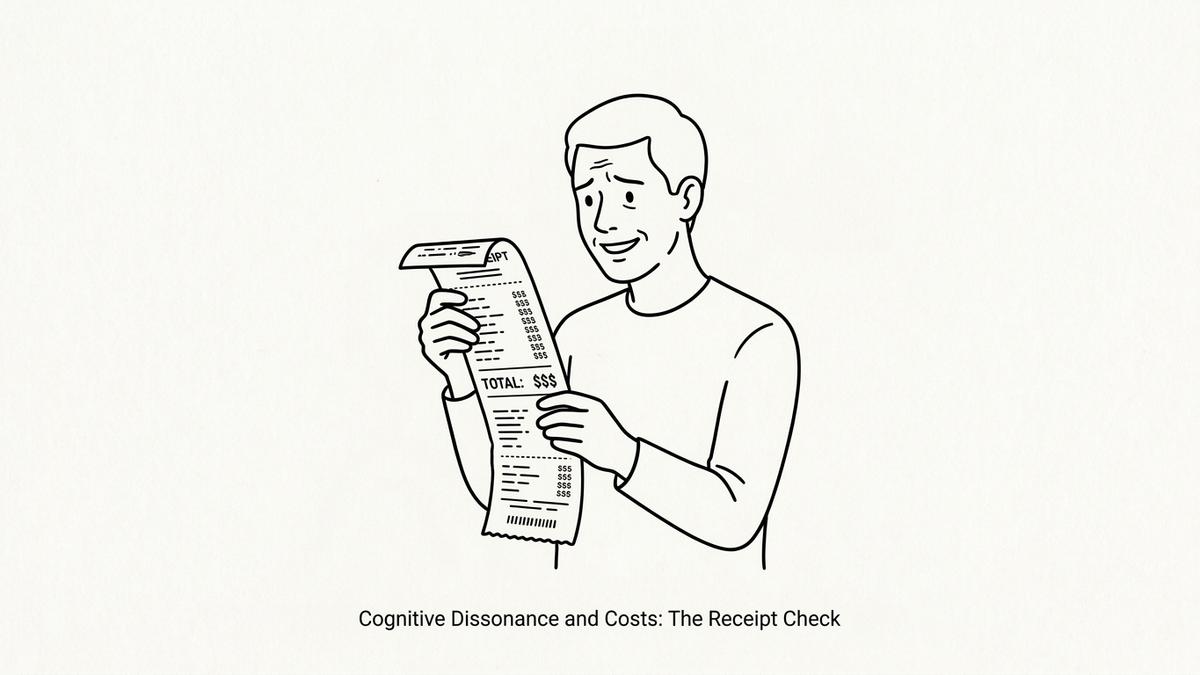
Picture a woman opening her mailbox on a Tuesday afternoon. She's got a six-figure salary, a fully funded emergency account, and a retirement portfolio that would make most financial planners nod in approval. Inside the mailbox is a utility bill for $47 more than she expected.
Her chest tightens. Her breathing goes shallow. Her hands actually shake.
This isn't a math problem. She can cover that bill a thousand times over without blinking. So why does her body react like she's standing at the edge of a cliff?
Because her bank account got the memo that she's safe now. Her nervous system never did.
Your Bank Account Moved On. Your Nervous System Didn't Get the Memo
We tend to assume that financial anxiety is proportional to financial risk. Less money in the bank, more worry. More money in the bank, less worry. Clean and simple, right?
Except it's not. Some of the most financially secure people you'll ever meet walk around in a near-constant state of money dread, while some people with barely a cushion to their name stay remarkably calm. If financial anxiety were purely about current numbers, this wouldn't happen.
That's because a huge amount of our money stress isn't coming from our present circumstances at all. It's coming from somewhere much older, much deeper, and much harder to reach with a spreadsheet.
What Is a Financial Flashpoint?
A financial flashpoint is a specific, emotionally charged money memory from childhood, one intense enough that your body filed it away not as a fact, but as a felt experience. Think of the difference between reading about a car crash in the news versus actually being in one. Both give you information. Only one leaves your body bracing every time you hear tires screech.
These moments get stored as what psychologists call implicit memory. Unlike the memories you can consciously recall and narrate, "when I was seven, we drove to my grandmother's house," implicit memories live below the surface. They're sensations, not stories. A tight chest. A held breath. A specific quality of silence in a room.
You might not remember the exact argument your parents had about the mortgage payment. But your body remembers what it felt like to sit at the top of the stairs, listening to voices get sharper, wondering if something bad was about to happen.
Here's the part that explains so much of adult financial behavior: implicit memory doesn't run through the thinking part of your brain. It runs through the amygdala, your built-in threat detector, the same system that makes you flinch before you consciously register a loud noise.
So when an adult version of that old trigger shows up, an unexpected bill, a dip in the market, a slightly awkward money conversation, your amygdala doesn't pause to check your actual bank balance first. It just presses the alarm. Full panic, before logic ever gets a vote.
Hypervigilance: Living on Permanent Alert
Once a flashpoint gets encoded, it doesn't just sit quietly waiting to be triggered. For a lot of people, it sets up permanent residence as low-grade hypervigilance.
This looks like:
- Checking your bank balance multiple times a day, even when nothing has changed
- Feeling a flicker of dread every time your phone buzzes with an email from your bank
- Struggling to enjoy a purchase, even a reasonable one, without a wave of guilt
- Running worst-case financial scenarios in your head during otherwise calm moments
None of this is about current risk. It's a nervous system that learned, a long time ago, that money situations can turn dangerous fast, and that the only way to stay safe is to never, ever stop watching.
Christine's Story: The VP Who Checks Her Balance a Dozen Times a Day
Let's make this concrete with a story that plays out more often than you'd think in high-earning households.
Christine is a VP of Operations earning $340,000 a year. She's got fourteen months of expenses sitting in an emergency fund, which is, frankly, an extraordinary cushion by almost any financial planner's standard. By every objective measure, Christine is financially secure.
And yet Christine checks her bank balance somewhere between six and twelve times a day. Not because she's expecting a specific transaction. Not because anything is actually wrong. It's compulsive, a reflex more than a decision, the financial version of touching your pocket to check your phone is still there even thirty seconds after you last checked.
When you trace this pattern back, it doesn't lead to a spreadsheet. It leads to a kitchen.
Christine's father lost his job when she was young, and in the aftermath, he took total control over the household finances, doling out cash with a kind of rigid, controlling authority that left no room for questions. Christine remembers standing in the doorway of the kitchen, watching her mother stand frozen at the sink, silent, unable to say a word about money in her own home.
That silence was the flashpoint. Not a single dramatic event, just a repeated, quiet powerlessness, a body learning that money equals danger and control equals safety.
Decades later, Christine's compulsive balance-checking isn't really about verifying numbers. It's about reclaiming the sense of control her mother never had. Every glance at her banking app is a small, unconscious way of saying "I see it, I know where it stands, I am not powerless in this kitchen."
Her income changed. Her circumstances changed completely. But until she named the flashpoint, her nervous system kept running the old program anyway.
The Money Autobiography: Naming the Origin to Strip Its Power
If Christine's story sounds a little too familiar, here's a way to start unwinding your own flashpoints. This exercise is simple, but don't mistake simple for easy. Give yourself real quiet time for this one.
Step 1: Find a quiet space
Turn off notifications. Get somewhere you won't be interrupted for at least twenty minutes. This isn't a task to squeeze into a commute.
Step 2: Write down your three earliest money memories
Don't overthink which ones qualify. Just start writing and see what surfaces. Common flashpoints include:
- Overhearing your parents argue about bills through a closed door
- A specific moment you were told "we can't afford that" in a tone that stuck with you
- Watching a parent's face change when opening a bill or a bank statement
- A sudden financial shock in the family, like a job loss or a repossession
- A moment you felt ashamed about money in front of other people, like at school
Step 3: Describe the sensory details, not just the plot
This is the part most people skip, and it's the part that actually matters. Don't just write "my dad lost his job." Write down what the room looked like. What sounds were present, or notably absent. And most importantly, what your body felt like in that moment. Tight throat? Frozen limbs? A pit in your stomach?
The body detail is what unlocks the implicit memory. The story alone keeps it intellectual. The sensation is where the real material lives.
Step 4: Connect it to a present-day pattern
Ask yourself honestly: where does this feeling show up in my adult financial life? Is it the compulsive balance check? The inability to spend on yourself without guilt? The avoidance of opening bank statements at all?
Step 5: Name it out loud, even just to yourself
Something as simple as saying, "this panic is from age eight, not from today," can create just enough distance for your logical brain to step back in. You're not erasing the memory. You're just finally putting a label on the alarm, so it stops masquerading as an emergency every single time it goes off.
Your Panic Has an Address, and It's Not Today
Financial flashpoints are sneaky precisely because they don't announce themselves. They just show up disguised as an overreaction to a $47 bill, or a compulsive habit you've never quite been able to explain, even to yourself.
But a flashpoint traced is a flashpoint that starts to lose its grip. Once you know the panic in your chest has an address, a specific kitchen, a specific year, a specific silence, it stops feeling like a mystery you have to obey.
So next time your hands shake over something your bank account can easily absorb, ask yourself one question: how old do I actually feel right now?
About the writer

Writer
Alice is a Senior Financial Actuary for EveryTuesdays.com. She covers personal finance optimization, statistical market analysis, and data-driven strategies for long-term investing
You May Also Like
Browse All
The Quiet Luxury Secret: Why the Truly Wealthy Look Poor (And the Broke Look Rich)
That $100k Ferrari doesn't prove someone's rich it proves they have $100k less. Here's why real wealth is built to stay invisible.

Earning More Than Your Family: Why Success Feels Like Betrayal
Why does hitting a financial milestone feel like betrayal instead of victory? Your attachment system may be reading success as a threat to belonging.
Are Your Childhood "Money Scripts" Secretly Sabotaging Your Bank Account?
Your bank account isn't broken your beliefs about money might be. Meet the hidden "money scripts" secretly running your financial life.