5 Quiet Habits That Build Millions (Do These Every Day)
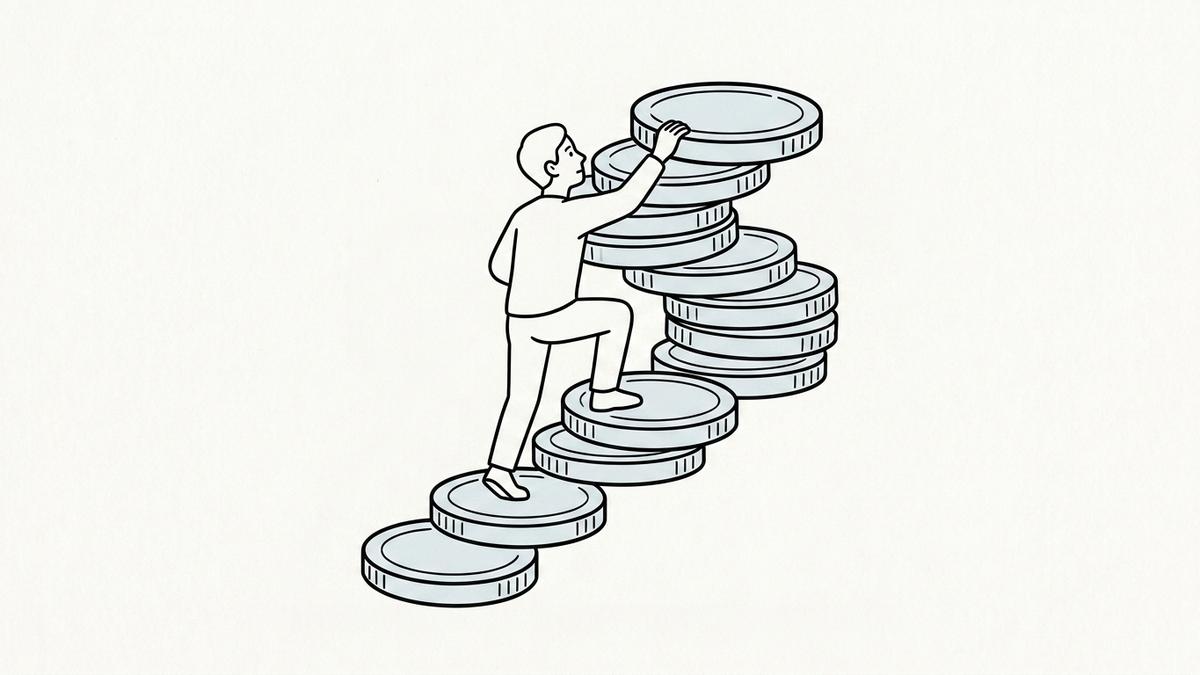
Discover the 5 psychology backed money habits wealthy people repeat daily from automated saving to the 48-hour rule that kills impulse spending.
The 5 Atomic Wealth Habits That Quietly Separate the Rich From Everyone Else
Most people think building wealth requires a genius stock pick, a lucky crypto bet, or a six-figure salary. It doesn't. The people who quietly become wealthy over a lifetime almost never do anything dramatic. They just repeat a handful of small, boring decisions, over and over, for years, while everyone else is chasing the next hot tip.
These aren't secrets. They're habits small shifts in behavior, rooted in psychology, that compound the same way money does. Once you understand why they work on a brain level, they stop feeling like willpower exercises and start feeling like a system you can trust.
Here are the five that matter most.
1. The Ghost Tax: Pay Yourself Before You Ever See the Money
Here's an uncomfortable truth about your own brain: if money sits in your checking account, you will find a way to spend it. This isn't a character flaw it's a well-documented feature of human psychology called "present bias." Our brains are wired to prioritize what feels good right now over what benefits us later. Combine that with Parkinson's Law the idea that expenses will always rise to meet whatever income is available and you get a simple, brutal outcome: the more you earn, the more you tend to spend, no matter how much you swear you'll save "this time."
The fix isn't more discipline. It's removing discipline from the equation entirely.
This is what you could call the "Ghost Tax." The moment your paycheck lands, 15–20% of it is automatically swept into an investment account an S&P 500 index fund is the classic, boring, effective choice before you ever get the chance to see it, feel it, or rationalize spending it. You never miss what you never touch. Your bank balance simply reflects a smaller number, and you build your entire lifestyle around that smaller number without ever feeling deprived.
The reason this works so well is that it turns saving from an active decision you have to make 12 times a year into a passive default you only have to set up once. Willpower is a finite, exhaustible resource. Automation isn't. That's why the people who build wealth quietly, in the background, are usually the ones who've made it impossible for their own impulses to get in the way.
2. The Dopamine Delay: Give Every Purchase 48 Hours
Have you ever bought something online at 11 p.m., felt a rush of excitement... and then felt nothing at all when it arrived three days later? That gap between the excitement of buying and the emptiness of owning is the entire business model of modern retail, and understanding it is one of the most useful things you can do for your bank account.
When you see something shiny — a new gadget, a limited drop, a "flash sale" the fast, emotional, impulsive part of your brain lights up and floods you with dopamine. Here's the key insight: you're not actually buying the product. You're buying the feeling of wanting it. The purchase itself is almost incidental.
The habit that counters this is deceptively simple: force a 48-hour cooling-off period on anything that isn't essential. Add it to the cart. Screenshot the listing. Then close the app and walk away. Don't decide "yes" or "no" in the moment just decide "not yet."
What happens during those 48 hours is that your brain's slower, more rational system gets a chance to catch up. The emotional high fades, and in the calm light of two days later, you can ask a much better question: do I actually want this, or did I just want the feeling of wanting it? More often than not, the urge evaporates entirely, and you keep the cash. On the rare occasions you still want it after 48 hours, you buy it but now you're spending from a place of intention instead of impulse, which is a completely different relationship with money.
3. Refuse to Let Your Lifestyle Grow With Your Income
Get a raise, buy a nicer car. Get a promotion, move into a bigger apartment. This pattern is so common it has its own name "lifestyle creep" and it's the single biggest reason why so many people who earn good money still feel broke.
The trap is subtle because it doesn't feel like overspending in the moment. It feels like deserving something. You worked hard, you earned more, so naturally you upgrade. But if your expenses rise in lockstep with your income, your bank balance stays exactly where it started at zero no matter how many raises you get. You're not accumulating wealth; you're accumulating a more expensive version of the same financial treadmill, often just to signal your new status to people around you.
The alternative habit is almost unnervingly simple: freeze your lifestyle when your income rises. If you get an extra $1,000 a month, you don't find $1,000 a month of new things to spend it on. You invest it, or you let it build a cushion, while your day-to-day life looks basically unchanged from the outside.
This matters because wealth isn't created by how much you earn it's created in the gap between what you earn and what you spend. Widen that gap every time your income grows, instead of closing it back to zero, and you build a genuine surplus. That surplus eventually buys you something far more valuable than a nicer car: control over your own time.
4. Go On an Information Diet
If you've ever felt a jolt of panic reading a headline like "MARKET CRASH IMMINENT" and immediately opened your brokerage app to check your portfolio, you already understand this one intuitively.
Humans are wired with a bias called "loss aversion" we feel the pain of losing money roughly twice as intensely as we feel the pleasure of gaining the same amount. Financial media knows this better than anyone, which is exactly why fear-based headlines dominate the news cycle. Fear gets clicks. Calm, boring, "keep doing what you're doing" advice does not.
People who steadily build wealth over decades tend to share one unusual trait: they don't check their portfolios daily, and they largely ignore the daily churn of financial news and speculative hype cycles. Call it an information diet. It's not that they're uninformed it's that they've deliberately limited their exposure to noise that has no bearing on their long-term plan.
This matters because reacting to short-term news is almost always the wrong move. It's what causes people to panic-sell during a dip, locking in real losses, and then FOMO-buy back in once prices have already recovered the exact opposite of buying low and selling high. By tuning out the daily noise, you protect yourself from your own worst financial instincts, which are usually triggered by headlines, not by anything actually happening to your specific investments.
5. Play the Long Game and Let Compounding Do the Work
Here's the least exciting-sounding habit on this list, and also the most powerful: consistent, unglamorous investing over a very long period of time, without interrupting it.
Our brains want quick results. We want to feel richer by next Friday. But genuine, durable wealth is slow, repetitive, and frankly a little boring which is exactly why so few people stick with it long enough to see the payoff. The habit here isn't complicated: buy solid, diversified assets and hold them, resisting the urge to time the market or chase whatever is trending.
The reason this works comes down to one of the most underappreciated forces in personal finance: uninterrupted compounding. Wealth built this way doesn't just grow it grows on top of its own growth, year after year, in a way that looks unremarkable early on and looks almost unbelievable decades later. The people who benefit most from compounding aren't necessarily the best stock-pickers. They're simply the ones who stayed invested the longest without pulling their money out during a scare, a dip, or a tempting new trend.
The Real Takeaway
None of these five habits require a finance degree, a high income, or insider knowledge. What they require is an honest look at how your own brain works the present bias that makes automation more powerful than willpower, the dopamine spikes that make a 48-hour delay so effective, the social pressure that fuels lifestyle creep, the fear that financial media is built to exploit, and the impatience that makes most people quit compounding right before it gets interesting.
Wealth, in the end, isn't built through a single brilliant decision. It's built through five unremarkable ones, repeated for years, until one day the results stop looking unremarkable at all.
About the writer

Writer
Alice is a Senior Financial Actuary for EveryTuesdays.com. She covers personal finance optimization, statistical market analysis, and data-driven strategies for long-term investing
You May Also Like
Browse All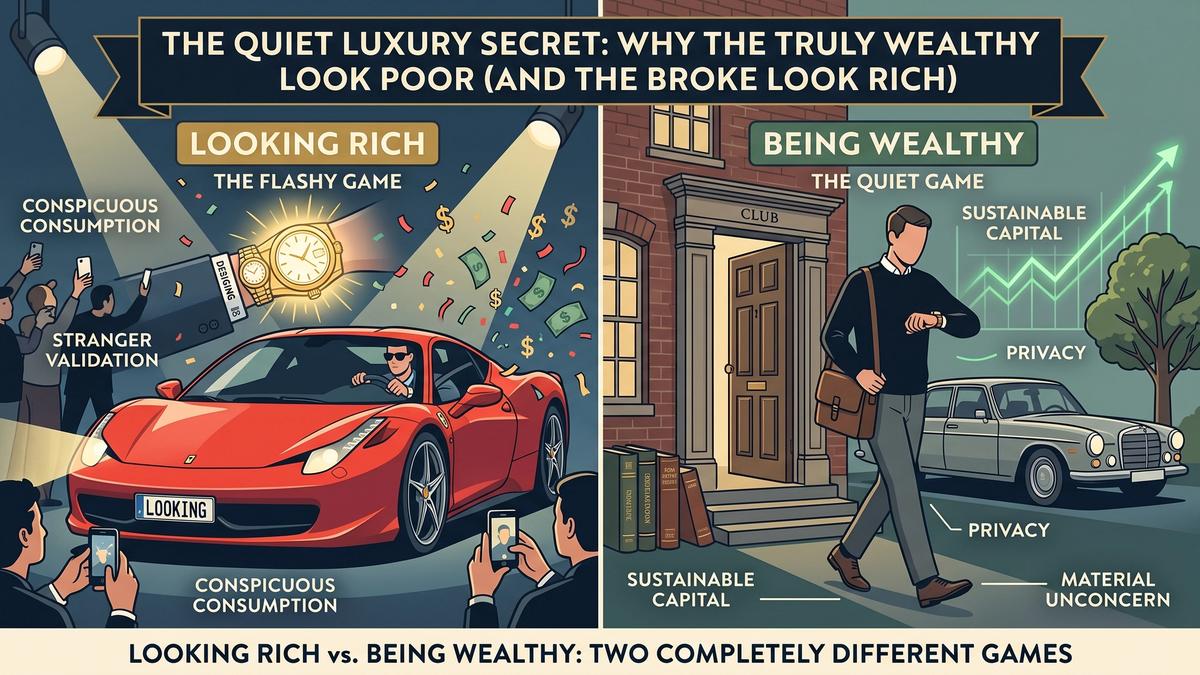
The Quiet Luxury Secret: Why the Truly Wealthy Look Poor (And the Broke Look Rich)
That $100k Ferrari doesn't prove someone's rich it proves they have $100k less. Here's why real wealth is built to stay invisible.

Earning More Than Your Family: Why Success Feels Like Betrayal
Why does hitting a financial milestone feel like betrayal instead of victory? Your attachment system may be reading success as a threat to belonging.
Why a $47 Bill Can Panic a Six-Figure Earner: Unpacking Financial Flashpoints
Your salary says you're safe. Your nervous system disagrees. Here's why a small bill can trigger full-blown panic and how to trace it back