MVP & Launch Strategy: From Idea to First Customer Acquisition
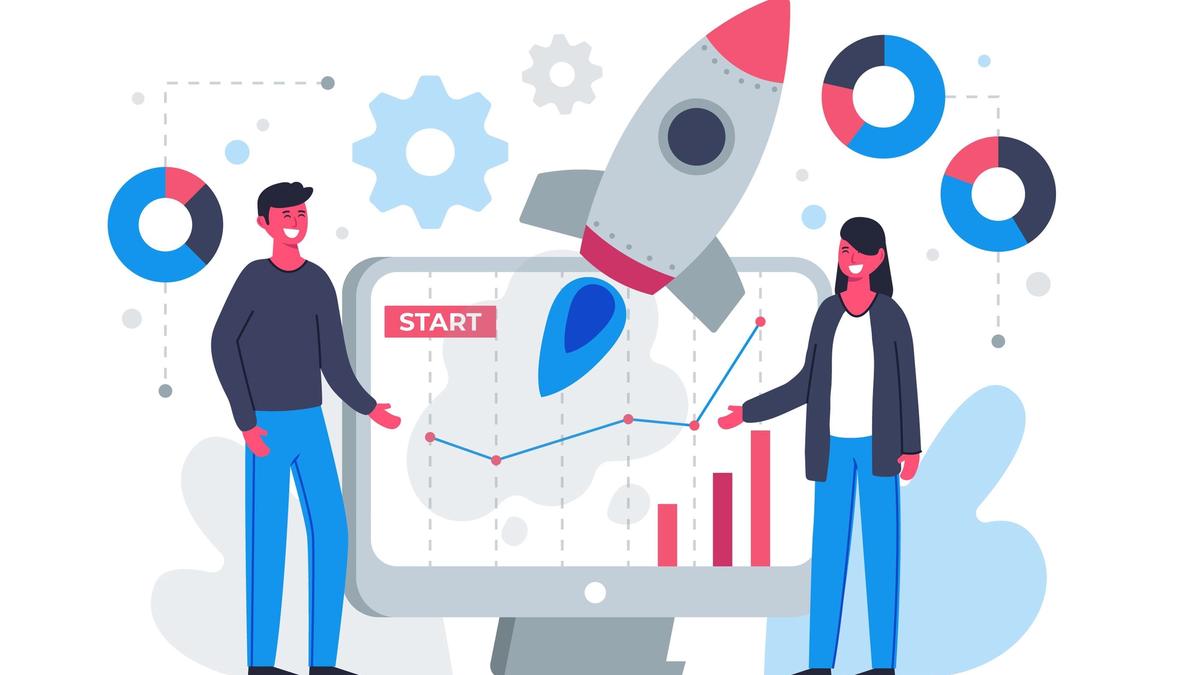
From validation to launch. Build your MVP, position it correctly, and acquire your first customers. The complete playbook from idea to product-market fit.
MVP & Launch Strategy: From Idea to First Customer Acquisition
See also: 7 Mental Frameworks for SaaS Success | Customer Obsession Guide | Sales Mentality for Technical Founders
Introduction
You have an idea. You think it's good. Now the hardest part begins: translating that idea into a product people will pay for.
Most founders get this wrong. They spend six months building a "feature-complete" product, then launch and discover they solved the wrong problem. Or they built the right problem but positioned it wrong. Or they can't convince anyone to try it.
The MVP and launch strategy isn't about building fast. It's about learning fast. It's about making a series of decisions that reduce risk and maximize your chances of finding product-market fit.
This guide walks through the entire process: from validating that people care about your problem, to building the minimal product that proves you can solve it, to launching in a way that gets real customers.
Part 1: Before You Code Anything
Step 1: Validate the Problem (4 weeks)
Most founders skip this step. They believe they understand the problem and jump straight to building. This is a mistake.
You need to know:
- People actually have this problem
- They're willing to spend money to solve it
- They're not already happy with existing solutions
The Validation Interview Process:
- Identify 20 people who have the problem you're trying to solve
- Schedule 30-minute calls with 10 of them
- Ask discovery questions (see Customer Obsession Guide for detailed interview technique)
- Listen specifically for: How often does this problem occur? How much time does it cost them? What are they doing now?
Red flags that suggest you should pivot:
- Everyone says "yeah, this is annoying" but nobody says "I'd pay to fix this"
- They've already found a solution (even if it's hacky)
- The problem only affects a tiny subset of the market
- Their budget for solving this is zero
Green flags that suggest you should proceed:
- At least 5 people say this is urgent
- They're currently paying money for a partial solution
- They've built workarounds (indicating frustration)
- They ask when you'll be available to try your solution
Step 2: Define Your Minimum Viable Product (2 weeks)
This is not "the smallest version of what you want to build." This is "the smallest thing you can build that proves your solution works."
The MVP Definition:
Your MVP is a testable hypothesis. Your hypothesis might be:
- "If people can [basic action], they'll see [specific value]"
- "If we integrate with [platform], customers will adopt faster"
- "If we charge [price], customers will stay longer than 3 months"
How to define YOUR MVP:
- Start with the job to be done (from Customer Obsession Guide)
- Example: "Engineers need to reduce database query time"
- Identify the minimum feature set that proves you solve the job
- What's the one thing a customer must be able to do?
- If they do that, do they get value?
- Can they evaluate if you're better than alternatives?
- Not: "We need query optimization, analytics, backup management, multi-region support..." But: "Engineers need to see which queries are slow and fix them"
- Make a ruthless prioritization list
Real MVP examples:
- Dropbox MVP: Upload and sync a folder across two computers. That's it. No sharing, no version control, no teams. Just sync.
- Stripe MVP: Process credit card payments via API for developers. No dashboard, no reporting, no analytics.
- Slack MVP: Chat in a channel with persistence. No threading, no integrations, no mobile app.
Each of these is minimal but sufficient to prove the core job.
Step 3: Build vs. Buy vs. No-Code (1-2 weeks decision)
You have three options:
Option A: Build it yourself
- Pros: It's exactly what you want, you control the timeline
- Cons: Takes longer, more expensive, requires technical skill
- When to choose: If no existing tool does what you need
Option B: Use existing tools
- Pros: Fast, cheap, proven reliability
- Cons: Can't differentiate, limited customization
- When to choose: If you're starting with manual or semi-automated processes
Option C: No-code/low-code tools
- Pros: Fast to build, easy to iterate, no infrastructure
- Cons: Limited scalability, vendor lock-in
- When to choose: For validation or light-traffic products
Decision framework:
- Can you validate your hypothesis with existing tools? → Use them
- Do you need custom performance or functionality? → Build
- Is this a one-off proof of concept? → No-code
- Is this your long-term product? → Build
Part 2: Building Your MVP
The Build Phase (4-8 weeks)
Key principles:
- Ruthlessness about scope You will feel tempted to add features. Don't. Every feature costs you two weeks of launch time. At this stage, two weeks is everything.
- User-driven iterations Don't build in isolation. Release to beta users (even if it's rough) and iterate based on what they do, not what they say.
- Metrics obsession You need to know: Are people using this? How are they using it? Where do they get stuck? Install analytics from day one. You'll want to know:
- How many people sign up
- How many try the core feature
- How many come back
- Where they drop off
Your MVP Tech Stack (Choose Boring)
Technical founder advice: choose the tech you know best. Your speed matters more than the perfect architecture.
Don't choose:
- A trendy new framework you've never used
- A technology because it's "best practice"
- A cloud provider because it's cheapest (you don't have customers yet)
Do choose:
- What you know deeply
- What your team can iterate quickly on
- What has boring, proven infrastructure
You can change your stack later. Right now, you're optimizing for speed to first customer.
Part 3: Preparing for Launch
Positioning: From Feature to Job (4 weeks before launch)
This is where Sales Mentality for Technical Founders becomes essential.
You've built something. Now you need to explain why anyone should care.
The Positioning Exercise:
- Write the feature list
- What can people do with your product?
- Translate features to benefits
- Feature: "Real-time collaboration"
- Benefit: "Teams that use this waste 40% less time in meetings"
- Connect benefits to the job
- Job: "Ship faster with better team alignment"
- Write your positioning statement
- "For [target customer] who [job], [product name] is [category] that [unique value]. Unlike [alternatives], we [key differentiator]."
Example (Slack): "For teams that need to communicate across time zones and tools, Slack is a communication platform that keeps messages searchable and organized. Unlike email, we make conversations transparent and keep history accessible."
This is your north star for all positioning decisions.
Landing Page: Lead with Jobs, Not Features
Your landing page has one job: get people to try your product.
Landing page structure:
- Headline (Lead with the job, not the feature)
- ❌ "Distributed database with sub-millisecond latency"
- ✓ "Ship data-heavy features 10x faster"
- Subheading (Amplify the job)
- "Stop waiting for database queries. Build and ship while your queries run."
- Customer problem (Paint a picture of the pain)
- "Database performance grinds your work to a halt. You're waiting 30 seconds for a query that should take 100ms. Your team's productivity tanks."
- How you solve it (Three benefits, not features)
- "Get sub-millisecond queries without managing infrastructure"
- "Integrate in minutes, not weeks"
- "Scale from startup to 1 billion records automatically"
- Social proof (Real customers, testimonials)
- If you don't have customers yet, get them before launch
- Call to action (One clear path)
- "Get started free"
- Don't offer multiple options
- Make it easy (no credit card, no long form)
Messaging for Early Adopters
Early adopters care about different things than mainstream customers:
Mainstream Customer
Early Adopter
Is this stable and mature?
Is this innovative and new?
What's the support like?
Can I influence the roadmap?
How many people use this?
Am I part of a community?
Will this company still exist in 5 years?
Am I getting in on the ground floor?
For your launch, optimize for early adopters. Your message should be:
- "We're new and you get to shape where this goes"
- "You're part of building this with us"
- "Early customers get special pricing/features"
Part 4: Launch Execution
The Soft Launch (Week 1)
You don't launch to everyone at once. You launch to people who care.
Week 1 activities:
- Email your network
- "We've been building X for months. Here's what we built and why."
- Get your first 20-50 beta users
- Get feedback and refine
- Reach out to early interview customers
- "Remember when you said you needed X? We built it. Can you try and give feedback?"
- Personal outreach converts 30-50%
- Find and reach out to communities
- Reddit communities where your target customer hangs out
- Slack groups, Discord, forums
- "Hey, I built this for people like you. Would love your feedback."
- Install analytics and support channels
- Intercom or similar for live chat
- Email support monitored constantly
- Slack channel for early users
Goals for Week 1:
- 20-50 active beta users
- 1-2 hours daily responding to feedback
- Daily iteration on critical bugs/UX issues
The Public Launch (Week 2-3)
Once your beta users are happy and you've fixed obvious issues, you go public.
Launch channels:
- Product Hunt
- If your product is consumer-facing or developer tool
- Plan for 1-2 months before launch
- One day of intense engagement gets you visibility
- Hacker News
- If your product is technical or building-focused
- Post at 8am UTC on Tuesday-Thursday
- Authentic, helpful comments drive upvotes
- Relevant communities
- Dev communities, subreddits, forums
- Be helpful, not spammy
- Answer every question for 48 hours
- Press/media outreach
- Reach out to journalists who cover your space
- Give them a story angle ("Why database latency is killing developer productivity")
- Most will ignore you, but some won't
- Your personal network
- Email your email list
- Tweet about it
- Ask friends to share
What NOT to do:
- Hire someone to run ads
- Spam communities with your link
- Oversell or over-promise
- Go silent after launch
The Post-Launch Period (Week 3-6)
Your job now: convert curious people into real customers.
Daily activities:
- Monitor all channels
- Product Hunt comments
- Hacker News discussion
- Emails, support, social media
- Answer every single question
- Have sales conversations
- Anyone who shows genuine interest, get on a call
- You're not trying to close, you're trying to learn
- What made them try? What would make them stay?
- Iterate based on feedback
- You'll get 50 feature requests
- Prioritize by: "Does this help more people get to the core value?"
- Build one thing per week max
- Get testimonials and case studies
- "Can I ask you some questions about how you're using this?"
- Ask permission to quote them
- Post testimonials on landing page
Part 5: From Launch to Product-Market Fit
Metrics That Matter
Week 1-4 (Before you have many customers):
- Are people using the core feature?
- Where do they get stuck?
- Would they recommend this to a friend?
Week 4-8 (Once you have 10-20 paying customers):
- Month-over-month growth
- Churn rate (should be <5% for new products)
- NPS (Net Promoter Score)
- Frequency of use
Week 8+ (Once you have traction):
- Customer acquisition cost
- Lifetime value
- Cohort retention
The Pivot or Persist Decision (Week 8)
After 8 weeks, you'll have enough data to decide: should you double down or change direction?
Signs you should persist:
- You have 10+ paying customers (not friends)
- At least 30% of people who try it keep using it
- Customers are telling others about it
- You're learning something new about your market every week
Signs you should pivot:
- You can't get past "interested" to "trying"
- People try your product and never come back
- Customers use it once and stop
- The biggest use case is different than what you expected
Pivot doesn't mean failure. Some of the best companies discovered their real market after pivoting. Slack started as a game company. Instagram started as a check-in app. YouTube started as a video dating site.
If you pivot, apply everything you've learned. You're not starting over—you're applying the same process to a new hypothesis.
How Everything Connects
Notice how all four guides work together:
- Mental Frameworks help you think clearly about your MVP
- First Principles: What's the core job?
- Constraints: What's the minimum feature set?
- Learning: What's your hypothesis?
- Customer Obsession tells you what to build
- Interview customers before building
- Synthesize their needs into your MVP
- Keep talking to customers during launch
- Sales Mentality tells you how to position it
- Position around the job, not the feature
- Have sales conversations during launch
- Learn what resonates
- MVP & Launch ties it all together
- Build the minimum thing that proves your job
- Launch to early adopters who care
- Learn and iterate
You can't skip any of these. A great product nobody knows about fails. A product nobody wants fails. A product that solves a job but isn't positioned right fails.
All four have to work together.
Common MVP Mistakes (And How to Avoid Them)
Mistake 1: Building for the "perfect" customer instead of early adopters
Solution: Early adopters have the problem acutely. They're willing to work with rough products. Build for them, not the mainstream customer.
Mistake 2: Launching with a feature-complete product
You don't have time. Shipping 80% in month one beats shipping 100% in month three. You can add features. You can't get time back.
Solution: Ship your MVP. Iterate with real customers.
Mistake 3: Positioning around features instead of jobs
"We built this with nosql database and real-time replication" means nothing. "We cut database latency by 99%" means something.
Solution: Write down what your customer gets (not the technology). That's your positioning.
Mistake 4: Not having any sales conversations at launch
You'll learn more from five customer calls than 50 signups. Calls tell you why people care. Signups just tell you they clicked.
Solution: During launch, spend 50% of your time in customer conversations.
Mistake 5: Abandoning customers after launch
Some founders treat launch as an event, not a beginning. They celebrate, then disappear. Launch is when the real work starts.
Solution: Plan for 6 months of intense customer engagement post-launch.
Your Pre-Launch Checklist
4 weeks before launch:
- [ ] Landed on clear positioning statement
- [ ] Built landing page that explains the job (not features)
- [ ] Have 10+ beta users actively using product
- [ ] Fixed obvious bugs from beta feedback
- [ ] Have a 1-minute pitch down pat
1 week before launch:
- [ ] Identified 5 communities where your customer hangs out
- [ ] Drafted posts for Hacker News, Product Hunt, Reddit
- [ ] Have customer testimonials ready
- [ ] Set up analytics and support tools
- [ ] Have customer interview questions ready (you'll want to learn)
Launch day:
- [ ] Post to all channels
- [ ] Check every 30 minutes for questions
- [ ] Answer every comment
- [ ] Schedule customer calls
- [ ] Don't sleep (kidding—sort of)
Week after launch:
- [ ] Continue engaging on all channels (day 2-7 is still important)
- [ ] Schedule customer calls with every serious prospect
- [ ] Document feedback by theme
- [ ] Plan one-week iteration
- [ ] Decide on next prioritization
Key Takeaways
- Validate before you code. Prove people care about the job.
- Define your MVP ruthlessly. One feature that proves the job.
- Position around the job, not the feature. Lead with what they get, not how you built it.
- Launch to early adopters first. They care about innovation and shaping the product.
- Have customer conversations from day one. Never stop learning.
- Iterate based on real usage. What people do matters more than what they say.
- Know when to pivot or persist. After 8 weeks, you'll have data.
The best MVP isn't the most impressive—it's the one that gets you to your first true customer the fastest. Build for that, and you'll be unstoppable.
What's Next?
Use this guide to execute on your MVP and launch:
- This week: Run three validation interviews with people who have your problem
- Next week: Define your MVP in detail (feature list, prioritization)
- Week 3: Start building or scoping your MVP timeline
- Week 6-8: Soft launch to beta users
- Week 10-12: Public launch
As you execute, refer back to the other guides:
- Customer Obsession: Use these techniques throughout
- Sales Mentality: Apply this during launch and customer conversations
- Mental Frameworks: Let these guide your decision-making
Related Resources:
- Customer Obsession Guide — How to validate your problem and MVP
- Sales Mentality for Technical Founders — How to position and launch
- 7 Mental Frameworks for SaaS Success — How to think about your MVP decisions
About the writer

Founder & Writer · EveryTuesdays
You May Also Like
Browse All
No-Code + AI: How Indie Hackers Are Building Apps With Bubble, Lovable & GPT in 2026
AI has supercharged no-code. Discover how indie hackers are combining Bubble, Lovable, and GPT-4 to build smarter apps faster and the tools making it possible in 2026.
How to Monetize a No-Code App: Pricing, Payments & Getting to $1K MRR
Built your no-code app now make it profitable. The complete monetization guide for indie hackers: pricing models, Stripe setup, conversion tactics, and reaching $1K MRR.

How to Validate a No-Code App Idea Before Building Anything (The 2-Week Method)
Stop building apps nobody wants. This 2-week validation method helps indie hackers confirm real demand, find paying customers, and avoid the #1 no-code startup mistake.